“Tell me, what is it you plan to do with your one wild and precious life?”

I recently watched Nyad. Annette Bening, Jodie Foster, Rhys Ifans and the gang give wonderful performances in this astounding story about the marathon swimmer, Diana Nyad, who in her 60s decided to reattempt a 110 mile open-ocean swim she had failed to complete in her 20s.

A quick read about the actual Diana Nyad reveals a controversial character, particularly in regard to the legitimacy of some of her claims and achievements. I had to think about this before posting – I don’t want to promote exaggeration or dishonesty.

However, I decided to share this blog because, firstly, the film is genuinely enjoyable, well crafted and uplifting.  Secondly, the story centres on a person who, well beyond her prime (though I wouldn’t dare suggest this to her) jumped back into an unforgiving ocean, the home of sharks and deadly box-jellyfish, believing she could swim for three days straight to achieve her goal. Whether all the ratifying technicalities were observed or not, the attempt, in and of itself, is simply awe-inspiring. Here is someone who backs her sentiments up with action:

“I just want to say three things. One, never, ever give up. Two, you’re never too old to chase your dreams. And three, it looks like a solitary sport, but it takes a team.”
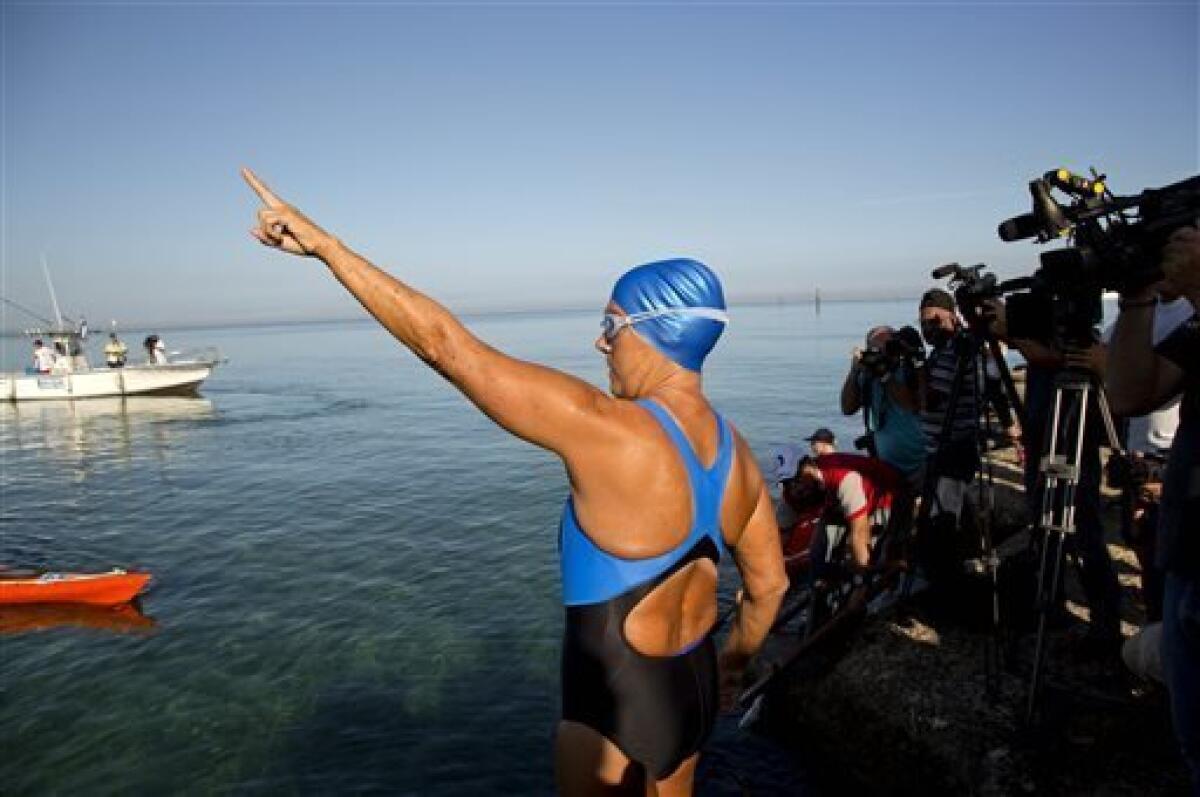
U.S. swimmer Diana Nyad, 64, points towards Florida before her swim to Florida from Havana, Cuba

My efforts to forge a career as an actor come with challenges that often seem insurmountable. I’m grateful for people like Diana Nyad who charge into the unknown, shine their light brightly from way over there and beckon us forward. 
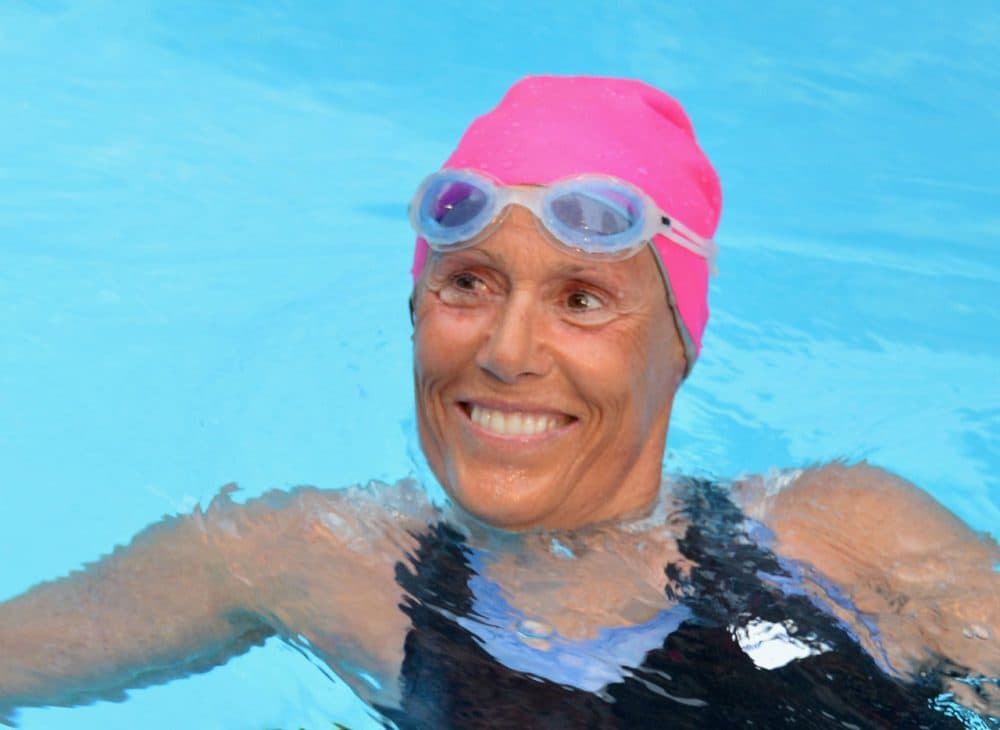
“Whatever your Other Shore is,
whatever you must do,
whatever inspires you,
you will find a way to get there.”

– Diana Nyad

Ps. The title of this post comes from the poem, The Summer Day by Mary Oliver, strongly referenced in the film and seemingly a source of inspiration to the actual Diana Nyad.

Ahem…fix it in post?

I found myself at Grand Central Recording Studios in London this week doing some ADR for an upcoming television show. Automated or Additional Dialogue Replacement is needed when the dialogue recorded during the shoot isn’t ‘clean’ – there might be distracting background noise, a corrupt audio file, a dodgy accent, etc. So, into the recording studio we go with the audio Wizards to make those ropey lines sound good and shiny.

Studio #9 at GCRS, London – a bit like being in a mini space launch control centre.

It’s an art form in itself to match a vocal performance at a time and place far removed from the day it was shot. Back then I was on a set, in costume, opposite other characters. Now I’m behind the glass of a silent booth, headphones on in front of a mic, watching my performance on a screen. And I’m watching very closely – the rhythm and tempo, the level of intensity, every pause and hesitation, each subtle movement of lips and breath – trying to match that performance perfectly and as naturally as possible.

It’s tricky. I can’t say I love it. I’m not the only one:

Watch Eddie Murphy at 0:56 – saving himself some studio time in Life, 1999.

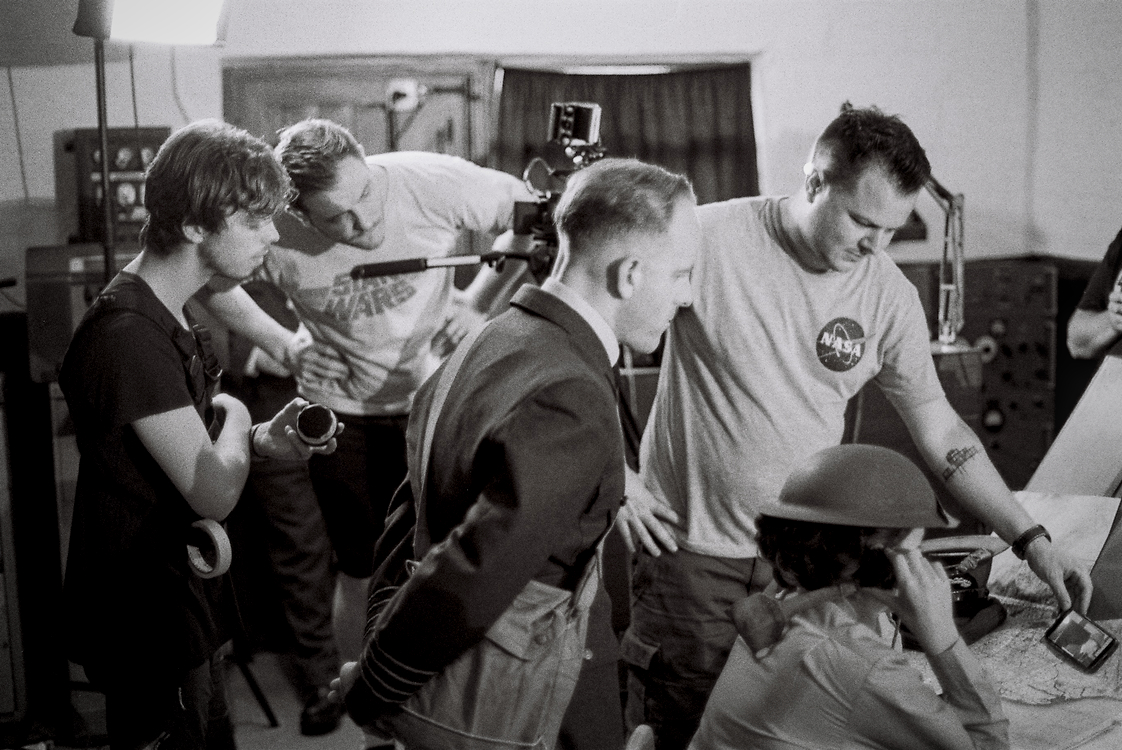
This was by no means my first foray into ADR – I remember repeatedly roaring “Nutty!” at the very same GCRS facility years ago. I’ve done numerous sessions on other films – I’ll be back in the studio with Tin Hat Productions in a couple of weeks for their next feature film, Battle Over Britain. So, despite the technical hoop-jumping involved, ADR is an important part of film-making and worth learning to love. It’s also astounding what can be achieved – around 80% of the dialogue we did in Lancaster Skies was fixed in post production. It can also be pretty darn funny – Bad Lip Reading is a YouTube channel based entirely on this process. Warning: Star Wars will not be the same after viewing the following video:

Some well known voices here – can you guess who they belong to?

All Quiet On The Western Front

The latest film from Edward Berger, based on the book by Erich Maria Remarque, is a stunning achievement. The world this cast and crew have created is so incredibly immediate it threatens to pull you into the sludge with it. Volker Bertelmann’s visceral score is sublime. Stories like this are essential counterpoint to other much-loved films that offer up death and destruction simply as entertainment.

“This book is to be neither an accusation nor a confession, and least of all an adventure, for death is not an adventure to those who stand face to face with it. It will try simply to tell of a generation of men who, even though they may have escaped shells, were destroyed by the war.”

– Erich Maria Remarque

I have subsequently been drawn back to the work of Wilfred Owen, a British poet who was killed in action, aged twenty-five, just one week before the armistice was declared ending World War I…his imagery is that much more harrowing:

Dulce et Decorum Est

By Wilfred Owen

Bent double, like old beggars under sacks,
Knock-kneed, coughing like hags, we cursed through sludge,
Till on the haunting flares we turned our backs
And towards our distant rest began to trudge.
Men marched asleep. Many had lost their boots
But limped on, blood-shod. All went lame; all blind;
Drunk with fatigue; deaf even to the hoots
Of tired, outstripped Five-Nines that dropped behind.

Gas! Gas! Quick, boys!—An ecstasy of fumbling,
Fitting the clumsy helmets just in time;
But someone still was yelling out and stumbling
And flound’ring like a man in fire or lime…
Dim, through the misty panes and thick green light,
As under a green sea, I saw him drowning.

In all my dreams, before my helpless sight,
He plunges at me, guttering, choking, drowning.

If in some smothering dreams you too could pace
Behind the wagon that we flung him in,
And watch the white eyes writhing in his face,
His hanging face, like a devil’s sick of sin;
If you could hear, at every jolt, the blood
Come gargling from the froth-corrupted lungs,
Obscene as cancer, bitter as the cud
Of vile, incurable sores on innocent tongues,—
My friend, you would not tell with such high zest
To children ardent for some desperate glory,
The old Lie: Dulce et decorum est
Pro patria mori.

(Latin phrase is from the Roman poet Horace: “It is sweet and fitting to die for one’s country.”)