Check, check: one-two, one-two

Headed to Tin Hat Production’s recording studio in Sleaford, Lincolnshire to clean up some dialogue for their upcoming feature film, Battle Over Britain.

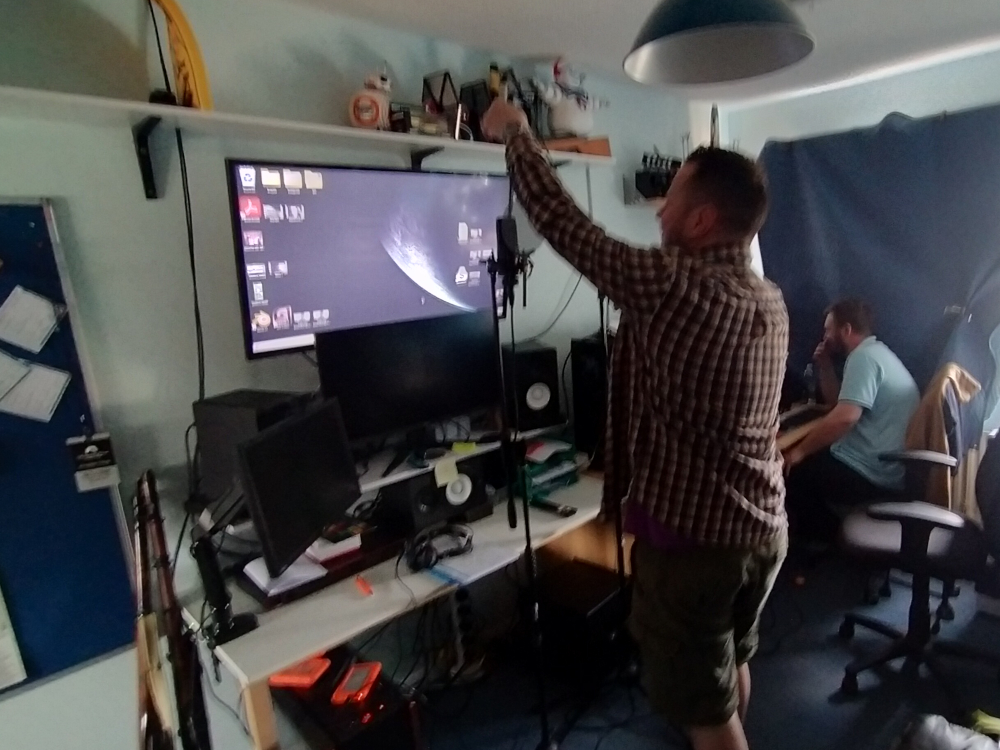
As you can see, recording studios come in all shapes and sizes (see Grand Central a few weeks ago). This studio was unmistakeably of the Tin Hat variety: their current niche is the First and Second World Wars, so yes, a lot of fire-power adorning the walls.

Battle Over Britain is about a group of Spitfire pilots defending the skies against Nazi Germany’s Luftwaffe at the height of the Battle of Britain – the first major military campaign fought entirely by air forces; a vital Allied victory.

From History.com: “Britain’s victory in the Battle of Britain demonstrated the courage and resilience of the country’s military and its people and allowed them to remain free from Nazi occupation. It also enabled the Americans to establish a base of operations in England to invade Normandy on D-Day in 1944.”

Battle Over Britain is set for release later this year with official trailers coming soon. For now:

Ahem…fix it in post?

I found myself at Grand Central Recording Studios in London this week doing some ADR for an upcoming television show. Automated or Additional Dialogue Replacement is needed when the dialogue recorded during the shoot isn’t ‘clean’ – there might be distracting background noise, a corrupt audio file, a dodgy accent, etc. So, into the recording studio we go with the audio Wizards to make those ropey lines sound good and shiny.

Studio #9 at GCRS, London – a bit like being in a mini space launch control centre.

It’s an art form in itself to match a vocal performance at a time and place far removed from the day it was shot. Back then I was on a set, in costume, opposite other characters. Now I’m behind the glass of a silent booth, headphones on in front of a mic, watching my performance on a screen. And I’m watching very closely – the rhythm and tempo, the level of intensity, every pause and hesitation, each subtle movement of lips and breath – trying to match that performance perfectly and as naturally as possible.

It’s tricky. I can’t say I love it. I’m not the only one:

Watch Eddie Murphy at 0:56 – saving himself some studio time in Life, 1999.

This was by no means my first foray into ADR – I remember repeatedly roaring “Nutty!” at the very same GCRS facility years ago. I’ve done numerous sessions on other films – I’ll be back in the studio with Tin Hat Productions in a couple of weeks for their next feature film, Battle Over Britain. So, despite the technical hoop-jumping involved, ADR is an important part of film-making and worth learning to love. It’s also astounding what can be achieved – around 80% of the dialogue we did in Lancaster Skies was fixed in post production. It can also be pretty darn funny – Bad Lip Reading is a YouTube channel based entirely on this process. Warning: Star Wars will not be the same after viewing the following video:

Some well known voices here – can you guess who they belong to?